Your skin is a living ecosystem
Your skin hosts approximately 1.8 million bacteria per cm². This isn't a hygiene failure — it's a sophisticated protective system. Your skin microbiome:
- Maintains a protective acid pH (4.5–5.5) that inhibits pathogen growth
- Competes with harmful bacteria for nutrients and space
- Stimulates the skin's immune system
- Produces antimicrobial peptides that protect against infection
This ecosystem is disrupted by many factors — and your daily shower is one of the most significant.
What chlorine does to your skin flora
Chlorine is a biocide. That's exactly its role in the distribution network: killing pathogens. The problem: it cannot distinguish beneficial skin bacteria from harmful ones.
A 2018 study in Microbiome journal analysed skin microbiome composition before and after repeated exposure to chlorinated tap water:
- 30–45% reduction in cutaneous bacterial diversity after repeated chlorinated showers
- Significant decrease in Lactobacillus species — key in eczema prevention
- Relative increase in chlorine-resistant species with fewer protective benefits
The links between chlorinated water and skin conditions
- Atopic eczema: a 2016 meta-analysis in the British Journal of Dermatology associated hard, chlorinated water with higher rates of atopic dermatitis in children
- Acne: chlorine can disrupt sebum balance and promote C. acnes overgrowth by depleting the protective microbiome
- Psoriasis: chlorinated water can exacerbate symptoms through skin barrier disruption and drying
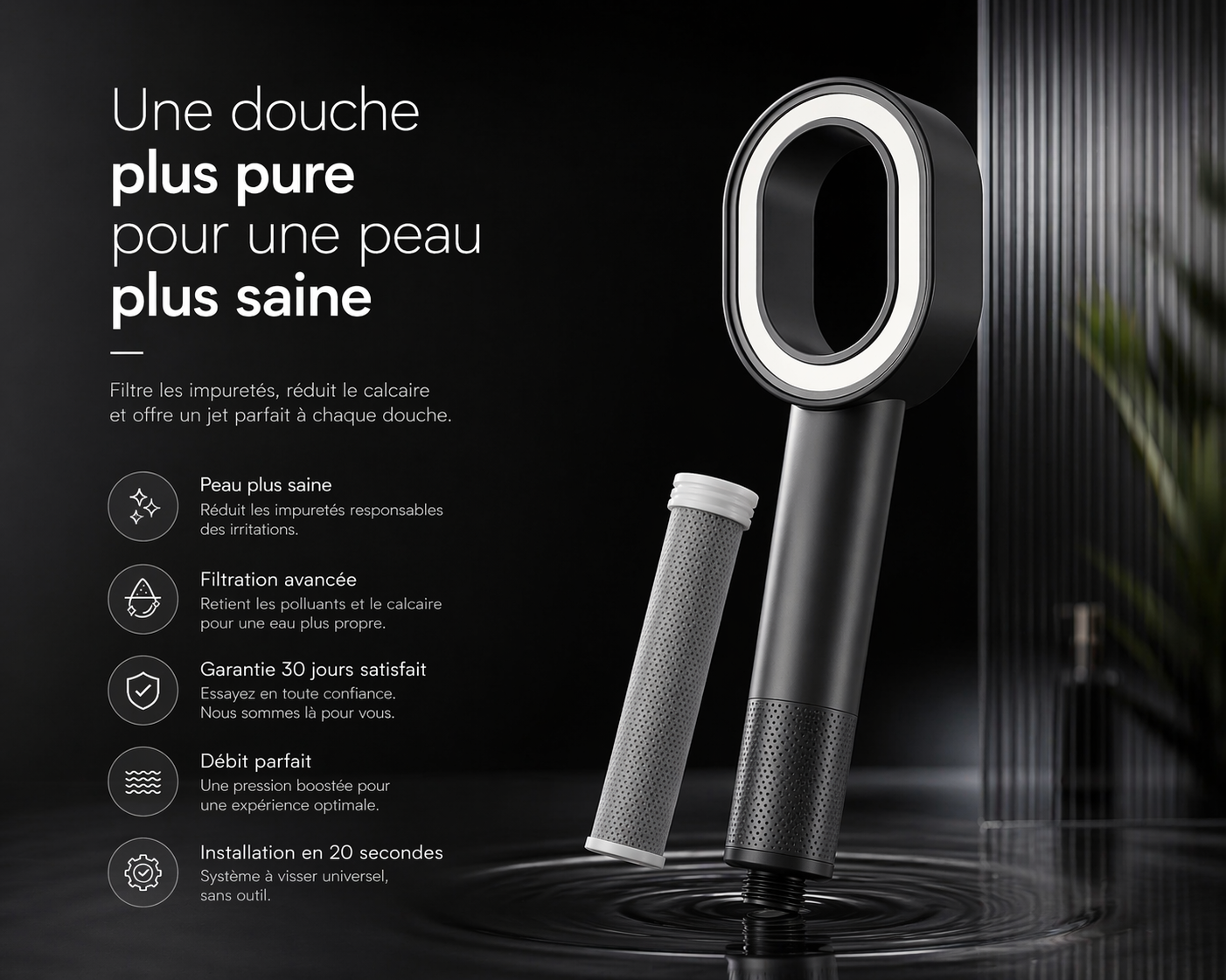
Activated carbon + KDF: removes chlorine, chloramine, disinfection by-products.
How to protect your skin microbiome in the shower
- Filter at source: an activated carbon shower head removes 97% of chlorine before it contacts skin — the single most effective measure
- Moderate temperature: max 38°C — excessive heat dehydrates and disrupts the protective film
- pH-neutral soap: alkaline soaps (pH 9+) disrupt the protective acid pH (4.5–5.5) of skin
- Moisturise immediately: apply moisturiser within 3 minutes of showering to lock in moisture and restore the skin barrier
- Reserve antibacterials: antibacterial soaps should be reserved for when clinically needed, not used daily
The Limpéa addresses the root cause: by removing chlorine before it reaches your skin, it preserves the diversity of your skin microbiome — the foundation of long-term skin health.