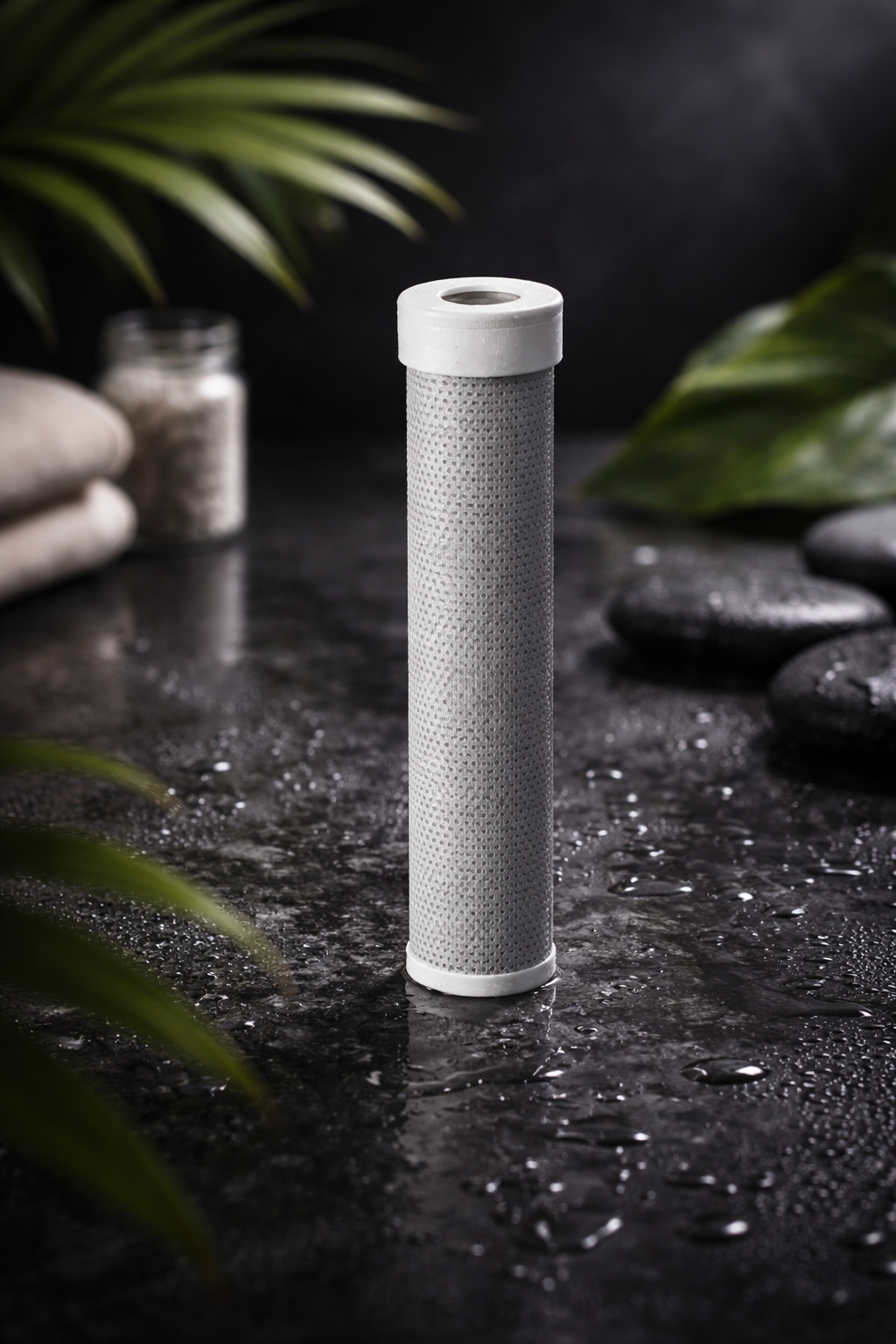
The finding that changed what "clean water" means
In 2019, researchers at the State University of New York published a global analysis of tap water quality. Their finding: microplastics — plastic fragments under 5mm, often just a few microns — were present in 83% of tap water samples from 14 countries. In Europe, 72% of samples tested positive.
Sources of microplastics in water networks:
- Degradation of PVC and polyethylene pipes
- Atmospheric deposition on catchment areas
- Insufficient removal at water treatment plants
- Contamination during storage and distribution
Why the shower matters more than drinking water
Ingesting a glass of water is a brief 250ml contact. A 10-minute shower exposes the entire body surface (~1.8m²) to warm water continuously, with two key factors:
- Heat opens pores: at 38–40°C, skin permeability increases significantly — the same mechanism that amplifies chlorine absorption.
- Duration and surface area: prolonged whole-body exposure to warm water is a meaningfully different absorption scenario than drinking.
Where research stands in 2026
The WHO's 2019 report on microplastics in drinking water found no evidence of short-term harm but called for urgent research on chronic exposure. The key developments since:
- 2021: First detection of microplastics in human blood (Environment International)
- 2022: Detection in human lungs, liver, and adipose tissue
- 2023: Microplastics found in human placenta and breast milk
- 2024: NEJM study associating arterial microplastics with increased cardiovascular risk
Activated carbon + KDF: removes chlorine, chloramine, disinfection by-products.
Practical steps you can take now
- Activated carbon shower filter: retains microplastics above 10–25 microns — the most accessible protective measure
- Lower temperature: 38°C instead of 42°C reduces pore dilation and skin permeability
- Shorter showers: 5–8 minutes provides complete hygiene while reducing exposure time
- Ventilate: steam can carry fine particles — open a window or door during and after showering
The Limpéa uses a high-density activated carbon filter that simultaneously addresses chlorine, chloramine, heavy metals, and suspended particles — including detectable microplastics.