Hard water hair loss vs. real alopecia: a critical distinction
True hair loss (alopecia) involves hair falling from the follicle — the root. What hard water causes is fundamentally different: it weakens the hair shaft until it breaks before reaching its natural length. The result looks identical — thinner, shorter hair — but the mechanism (and therefore the solution) is completely different.
The mechanism: calcium and magnesium ions in hard water deposit onto the hair's cuticle layer (the protective scales). These deposits:
- Lift and roughen the cuticle, exposing the cortex to damage
- Create mineral build-up that weighs down individual strands
- Reduce the efficacy of conditioners and treatments (they can't penetrate the mineral coating)
- Create friction between fibres, amplifying mechanical breakage during brushing
The chlorine amplifier effect
Hard water doesn't act alone. Chlorine in tap water (typically 0.1–0.5 mg/L) compounds the damage:
- Oxidises keratin proteins → hair loses elasticity and becomes brittle
- Strips the cuticle's natural lipid layer (18-MEA) → permanent porosity
- Bleaches pigment progressively (noticeable on coloured and dark hair)
- Dries the scalp → itching → scratching → mechanical breakage amplified
Studies on competitive swimmers — exposed to high-chlorine water daily — show significant structural degradation of the hair fibre within 3–6 months. The same chemistry applies in your shower at lower concentrations, every single day.
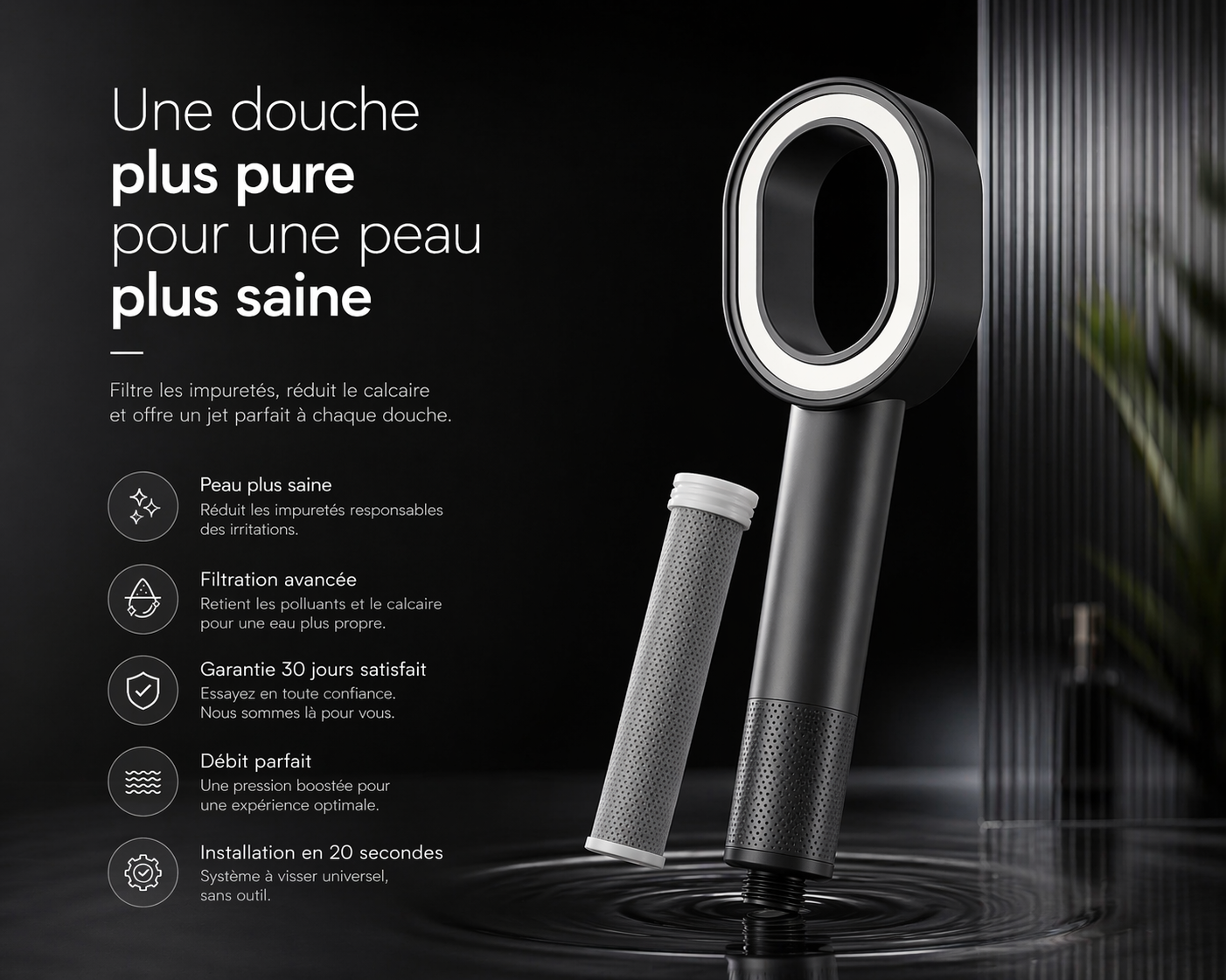
Filters 97% chlorine + reduces water hardness = less hair breakage from week one.
What actually works for hard water hair loss
- Filtered shower head: removes 97% of chlorine and reduces water hardness at point of contact — the most effective single intervention
- Acidic rinse: 1 tbsp apple cider vinegar in 500ml water after shampooing. Acid closes cuticles and dissolves mineral deposits
- Chelating shampoo: use monthly to strip accumulated mineral deposits (contains EDTA or citric acid)
- Cold final rinse: seals cuticles and improves shine
- Protein treatments: restore chlorine-oxidised keratin
The Limpéa addresses both hard water and chlorine at source. Our customers consistently report 40–60% less hair breakage within 3–4 weeks, with improved hair texture and shine from the first week.